

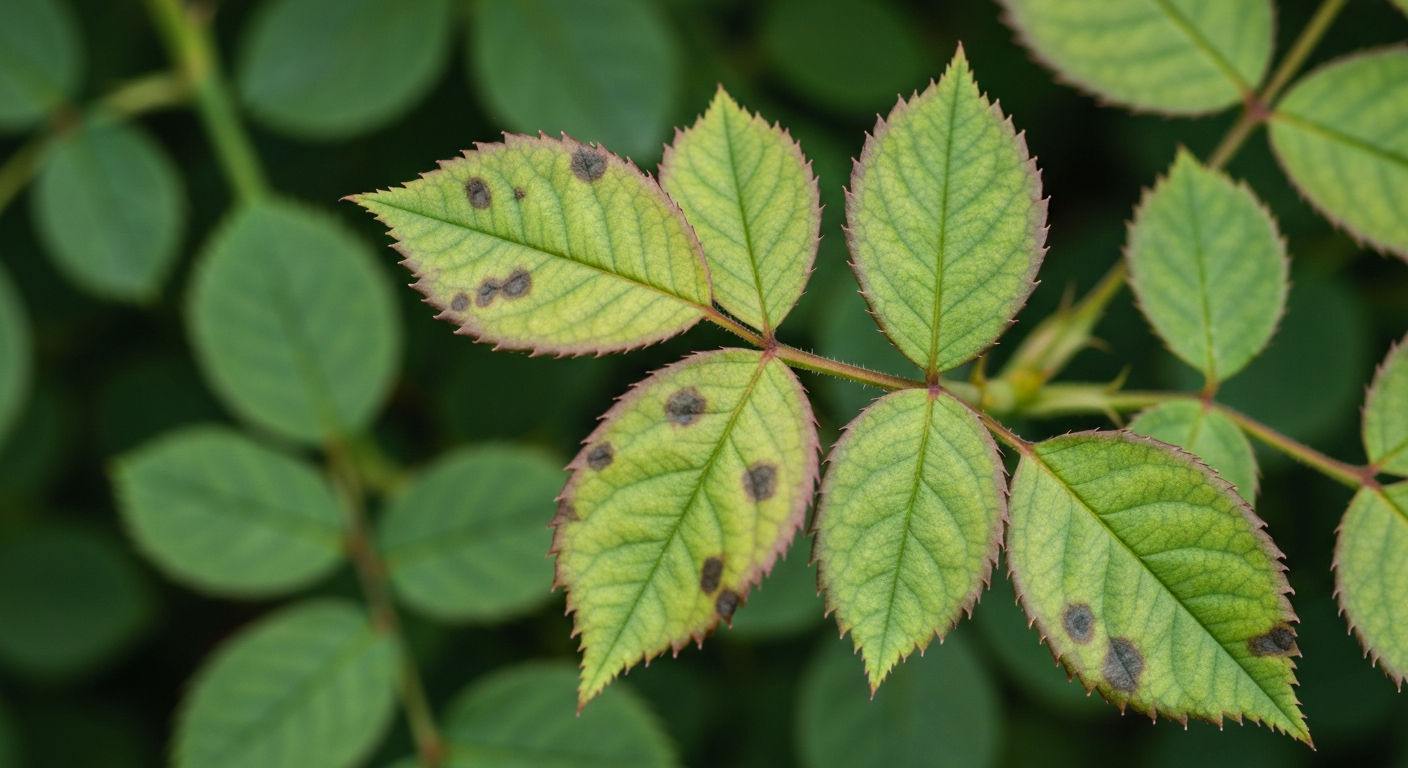
Black spot on roses (Diplocarpon rosae) is the fungal disease behind many bare-legged bushes by midsummer in humid US regions. Dark circular lesions surrounded by yellow tissue cause premature leaf drop from the bottom upward, weakening repeat-blooming cultivars and reducing winter hardiness. Gardeners search black spot on roses when floribundas, hybrid teas, and climbers lose leaves despite faithful watering—because water on leaves, not drought, often fuels the problem.
This comprehensive guide covers symptoms and progression, environmental causes, diagnosis steps, organic and chemical treatment timing, resistant varieties, prevention through the year, mistakes that guarantee reinfection, and how to photograph leaves for the Plant Disease Identifier app. For general spotted foliage on non-roses, see leaf spot disease; for white powder on nearby peonies or apples, see powdery mildew on plants.
Why black spot matters beyond a few spots
Each fallen infected leaf releases spores onto soil and lower foliage. Defoliation reduces photosynthesis during peak bloom cycles. Weakened canes attract secondary stress, and gardeners sometimes abandon roses entirely—when sanitation and timing would have preserved the planting.
Black spot is preventable as a system: air movement, dry leaves by nightfall, debris removal, and strategic fungicides in wet springs—not a single panic spray in August.
Symptoms of black spot on roses
Watch for:
- Black or dark brown spots roughly ⅛–½ inch wide, often circular with feathery or smooth margins
- Yellow halos spreading outward from spots
- Premature leaf drop starting on lower canes and moving up
- Fewer blooms and thinner stems when infections repeat yearly
- Purple-tinged new spots on some cultivars early in infection
Capture leaves showing green tissue, yellowing, and spot borders in side light—ideal for AI and year-over-year comparison.
Progression timeline
Spots may appear seven to fourteen days after spores land on wet leaves. Yellowing follows; leaves drop. Without cleanup, soil and mulch harbor inoculum for splash next rain. In Mid-Atlantic and Gulf climates, two infection cycles per season are common.
Causes and conditions that trigger outbreaks
- Overhead irrigation wetting foliage at evening
- Dense interior canes blocking air
- Fallen infected leaves left on beds or composted inadequately at home
- Warm days + cool nights + leaf wetness for extended periods
- Susceptible cultivars planted in full-sun spots still hit by sprinkler overspray
Black spot is fungal—not caused by ants, though ants follow honeydew from other pests. Rule out brown spots on plant leaves from scorch on one sun-facing leaf only.
Diagnosis steps before treatment
- Confirm spot pattern — dark lesions with yellow halos on rose leaves.
- Check lower canopy first — classic bottom-up progression.
- Review watering — sprinklers vs. soil soaker.
- Inspect recent weather — prolonged leaf wetness?
- Photograph representative leaves; use plant disease identifier if unsure vs. cercospora or anthracnose on other plants nearby.
- Estimate percent foliage affected — guides whether sanitation alone suffices.
- Plan seven-day follow-up — spread upward means escalate.
Organic treatment for black spot on roses
- Sanitation: Rake and discard fallen leaves—trash or municipal yard waste, not small home compost piles of heavy infection.
- Prune: Open congested interior canes in late winter; remove crossing branches.
- Water: Soil-level morning irrigation only; keep foliage dry overnight when possible.
- Mulch: Fresh mulch after spring cleanup reduces splash—do not bury old infected leaves under new mulch without removal.
- Organic fungicides: Sulfur, neem, bicarbonate, and biological programs per label—begin early in wet springs, not after defoliation.
Remove the worst spotted leaves on heavily infected bushes if enough healthy foliage remains to support recovery.
Chemical treatment when appropriate
Conventional rose fungicides earn their place when:
- Wet springs forecast >10% foliage spotting before bloom peak
- Repeat defoliation occurred last year on the same bed
- High-value specimens must remain foliated for exhibition or sales
Begin protectant programs before spots cover large canopy percentages—labels specify intervals (often 7–14 days). Rotate FRAC groups within the season to slow resistance. Read rose-specific labels; some ingredients harm tender new growth in heat—follow temperature limits.
Resistant varieties and planting choices
When replanting, choose cultivars marketed for black spot resistance within your climate zone. Resistance is not immunity—still practice sanitation—but symptom pressure drops enough that many gardeners skip intensive sprays. Local rose societies publish regional performance lists worth more than national marketing alone.
Prevention calendar for rose black spot
| Season | Task |
|---|---|
| Late winter | Hard prune for airflow; remove mummified leaves tangled in canes |
| Early spring | Apply fresh mulch after debris cleanup; install drip if possible |
| Bloom season | Scout lower leaves weekly; photograph first spots |
| After heavy rain | Avoid working wet plants; plan fungicide window if pressure high |
| Fall | Rake all rose leaves from beds; do not compost infected material at home |
| Indoors | Not applicable—black spot is primarily outdoor rosaceous foliage disease |
Regional considerations across the United States
Black spot pressure is not uniform. Gulf Coast and Mid-Atlantic gardeners often fight continuous humidity from April through October, requiring earlier fungicide windows and aggressive debris removal. Midwest growers may see intense spring rain followed by drier July weeks—use dry spells to open canopies and refresh mulch rather than spraying during heat stress. Southwest desert rosarians battle fewer foliar fungal days but must avoid sprinkler overspray on heat-stressed leaves where sun scorch mimics spots. Pacific Northwest mild summers can still sustain infection when evening fog keeps foliage wet—scout even when blooms look perfect.
Join a local rose society or extension list: cultivar performance ratings in your town beat national marketing claims. If neighbors neglect infected bushes upwind, your sanitation must be tighter—spores travel farther than many beginners assume.
Integrating roses into an IPM plan
Integrated pest management for roses combines resistant genetics, cultural habits, monitoring, and chemistry only when thresholds are met. Threshold example: treat when more than one spot appears per ten lower leaves in a wet week, or when yellowing begins on multiple canes. Below threshold, rake and prune may suffice. Above threshold on susceptible teas, begin labeled protectant sprays on schedule until weather dries.
Record cultivar names beside photos in your phone. Over three seasons you will learn which bushes only need sanitation and which require spray calendars—saving money and pollinator exposure on easy cultivars. Photograph the same bush each May 15 and July 15 to build a personal database—visual memory alone underestimates how fast black spot climbs in wet Junes.
Mistakes to avoid
- Overhead sprinklers at dusk in June
- Composting infected rose leaves in backyard bins
- Waiting until half the bush is bare before first fungicide in wet climates
- Planting roses in lawn sprinkler spray patterns
- Ignoring neighboring infected bushes upwind
- Applying oil sprays during extreme heat on sensitive cultivars
Companion planting myths around black spot
Garlic, marigolds, and other companions do not replace sanitation or dry leaves for black spot control on roses. Focus on resistant cultivars, drip irrigation, and debris removal. Companions may help general garden health but should not delay proven rose IPM steps in wet Junes.
Using the Plant Disease Identifier app
Roses are heavily represented in training data—good photos yield strong suggestions. Install Plant Disease Identifier:
- Photograph yellowing leaves with both healthy green and spotted areas.
- Confirm black spot vs. look-alikes (cercospora on other hosts nearby is a common confusion in mixed beds).
- Save scans each spring to compare cultivar susceptibility in your garden.
Apps guide naming; sanitation and dry leaves do the heavy lifting.
Related: general lesion management in leaf spot disease and humidity diseases in powdery mildew on plants.