

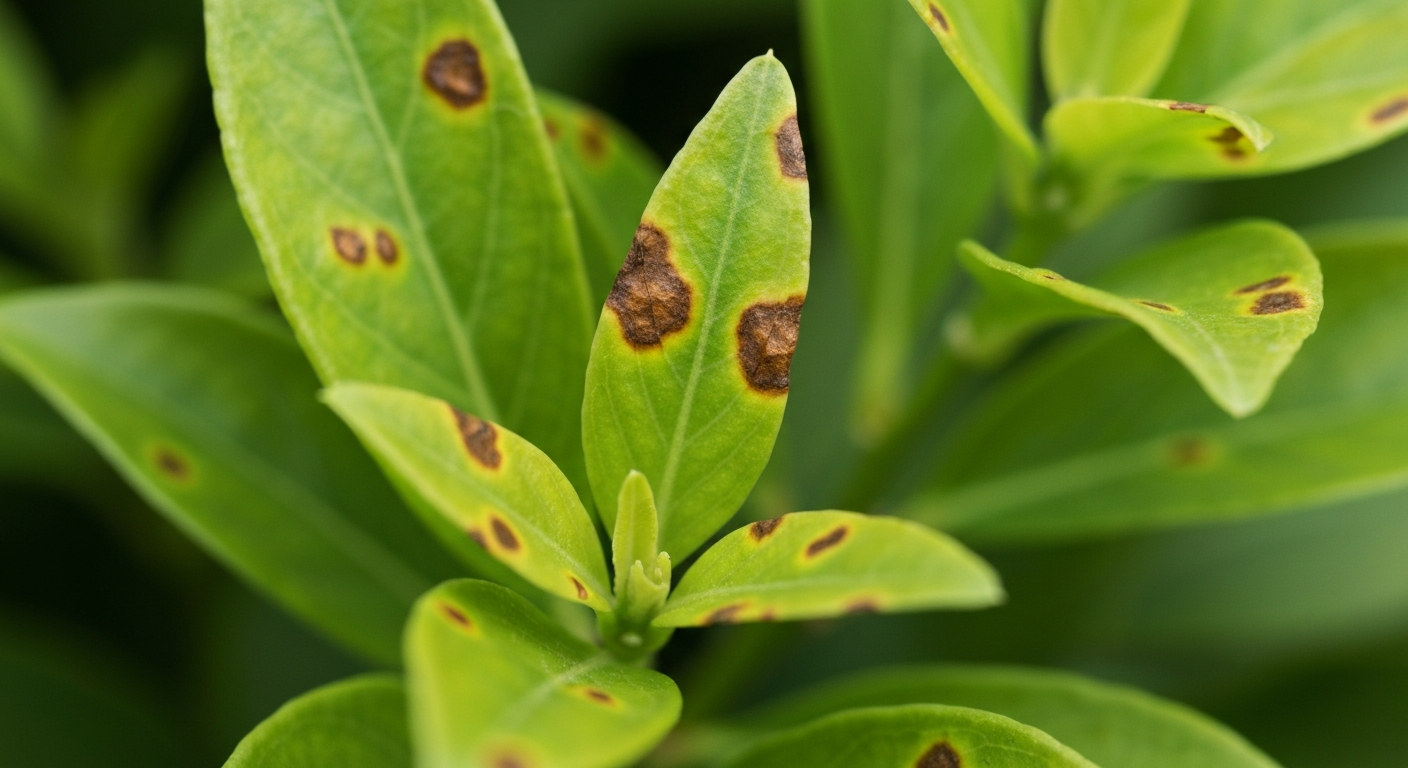
Brown spots on plant leaves are among the most searched garden symptoms—and among the least specific. A single brown dot might mean fungal leaf spot disease, bacterial infection, insect stippling, sun scorch, edema from irregular watering, or fertilizer burn. US gardeners often reach for fungicide first; sometimes that makes the plant worse. This article teaches you to read spot shape, halo, location, and speed so you choose the right next step: prune, adjust water, treat pests, or apply a labeled fungicide.
We cover symptoms by cause, diagnosis workflow, organic and chemical treatment when fungus is confirmed, prevention through the seasons, mistakes to avoid, and how the Plant Disease Identifier app helps when spots look alike. Cross-reference black spot on roses for rose-specific lesions and root rot when wilting accompanies wet soil despite spotted leaves.
Why brown spots demand careful diagnosis
Spots are data. Fungal lesions often enlarge over one to two weeks with yellow halos. Bacterial patches may look water-soaked before browning. Mite damage shows fine speckling with webbing underneath. Sun scorch appears only on the sun-exposed side after a sudden heat spike. Treating all brown spots as fungus wastes money and delays real fixes—especially on houseplants where overwatering and sick plant stress outrank pathogens statistically.
Photograph spots at first appearance. Compare weekly. Spread across lower leaves after rain suggests splash-borne fungus; static spots after a window move suggest culture.
Fungal leaf spot: symptoms and pattern
Fungal brown spots commonly show:
- Round or irregular necrotic centers with yellow halos
- Enlargement over 7–14 days
- Start on lower, older leaves where humidity lingers
- Concentric rings on some hosts (tomato early blight—see tomato plant diseases)
- Dark fruiting bodies visible with a hand lens on septoria-type spots
Management: remove worst leaves, improve airflow, avoid night-wet foliage, apply labeled fungicides if early and confirmed.
Bacterial leaf spot look-alikes
Bacteria may present as:
- Water-soaked areas before they turn brown
- Angular spots bounded by veins on cucurbits
- Rapid spread in warm wet weather after hail or overhead irrigation
Copper products help some programs when label allows; sanitation and drip irrigation matter as much as chemistry.
Non-disease causes of brown spots
| Cause | Clues | Fix |
|---|---|---|
| Sun scorch | Bleached then brown on sun-facing side only | Shade, acclimate, move pots |
| Oedema/edema | Corky raised bumps, often indoors | Even watering; more airflow |
| Drought | Crispy margins, dry soil | Deep soak; adjust schedule |
| Salt/mineral | Crusty residue, tip burn after feed | Flush soil; use filtered water if needed |
| Pest stippling | Underside webbing or insects | Treat pest first |
| Cold damage | Browning after frost event | Prune dead tissue; wait for recovery |
If no halo, no enlargement, and soil is soggy, inspect roots before any fungicide.
Environmental causes that favor fungal spots
- Overhead watering at evening in humid climates
- Crowded houseplant shelves with misting
- Rain splash from soil-borne inoculum
- Infected debris from last season on roses and tomatoes
- Tools shared between plants without cleaning
Diagnosis steps for brown spots on plant leaves
- Measure progression — mark a spot with pen on tape or photograph with ruler reference.
- Check halos and rings — yellow halos favor fungus; greasy water-soaked favors bacteria.
- Inspect undersides for mites, aphids, scale.
- Feel soil — wet vs. dry vs. wilting mismatch.
- Recall recent events — move, feed, heat wave, repot.
- Photograph in indirect light; use plant disease identifier if unsure.
- Choose one hypothesis and intervene; reassess in seven days.
Organic treatment when fungus is likely
- Remove up to 20–30% of heavily spotted leaves; sterilize shears.
- Space plants; stake tomatoes; thin rose interiors.
- Water soil in morning; use drip outdoors where possible.
- Mulch soil under tomatoes and roses to reduce splash.
- Apply sulfur, copper, bicarbonate, or neem only when label matches plant and problem.
Bag infected foliage for trash in high-pressure disease years—especially roses with black spot potential.
Chemical treatment when appropriate
Use conventional fungicides when:
- Spots multiply weekly on food or high-value ornamentals
- Lower leaves yellow and drop during fruit or bloom windows
- Organic program failed after proper sanitation
Rotate active ingredients on tomatoes and roses. Observe pre-harvest intervals on vegetables.
Prevention calendar
Spring: Clean beds; rotate crops; choose resistant cultivars; mulch.
Summer: Scout weekly; photograph first spot; avoid pruning wet plants.
Fall: Rake rose debris; destroy infected tomato vines if blight present.
Indoors: Water soil directly; run fan; quarantine new plants two weeks.
Houseplant species where brown spots are common
Monstera and pothos may show edema bumps when watering swings wildly—corky tan patches that do not enlarge like fungus. Fiddle leaf figs brown from low humidity and inconsistent soil moisture before pathogens appear. African violets hate cold water on leaves, producing tan rings that look alarming but reflect culture. Calatheas and begonias in steamy bathrooms without airflow develop real fungal spots quickly—fix the fan before the fungicide.
When you bring home a supermarket orchid or big-box tropical, quarantine two weeks and photograph every leaf. Retail greenhouses sometimes ship plants with early leaf spot disease already incubating.
Vegetable and ornamental beds: spot tracking worksheet
Keep a simple log: date, plant name, spot size in millimeters, halo yes/no, weather notes, action taken. After two entries seven days apart, enlarging halos confirm active fungal leaf spot in humid yards; static spots after a heat wave point to scorch. This log also improves photo AI use—you can describe progression to extension agents without guessing.
For community gardeners sharing tools, soak pruners in labeled disinfectant between plots. When brown spots appear after a long vacation, suspect both drought recovery spotting and opportunistic fungus—check soil depth moisture on return before assuming the worst, then photograph daily for one week to see if halos develop. One shared bypass pruner can move septoria from tomatoes to peppers faster than wind alone in a crowded teaching garden.
Mistakes to avoid
- Spraying fungicide on sunburn without changing exposure
- Removing all leaves on a weak plant—keep healthy tissue for recovery
- Composting infected rose leaves
- Overhead misting at night on calatheas and begonias
- Ignoring pests because spots “look fungal”
- Using dish soap mixes not labeled for plants—leaf burn mimics new spots
Light, lenses, and better spot photos
Phone cameras struggle in dim rooms—move the plant or use indirect window light. Tap to focus on the spot margin, not the background. Include a coin or ruler in one shot for scale when asking extension volunteers. Good photos improve AI and human diagnosis equally; blurry brown blobs waste everyone’s time.
Using the Plant Disease Identifier app
Brown spots are variable in photos—sharp detail wins. Install Plant Disease Identifier:
- Frame one leaf showing spot, halo, and healthy margin.
- Review multiple AI suggestions; low confidence means check pests and culture.
- Save dated scans to see if spots enlarge after treatment.
Apps narrow possibilities; your moisture and pest checks confirm them. Label pots with last water date when learning a new species—brown spots from erratic care often trace to forgotten weekend trips, not mysterious fungus.
Related: compare rose-specific dark lesions in black spot on roses and general lesion control in leaf spot disease.