

As a home gardener, few things are as rewarding as harvesting your own juicy, sweet peaches. But the journey from blossom to basket can be fraught with challenges, particularly when it comes to peach tree diseases. These unwelcome guests can swiftly turn a promising crop into a heartbreaking loss if not identified and managed promptly. Understanding the common ailments that affect peach trees, how to diagnose them, and what steps to take for treatment and prevention is crucial for a successful harvest.
This comprehensive guide from plantdiseaseapp.com is designed to equip you with the knowledge needed to protect your beloved peach trees. We’ll delve into the most prevalent diseases, offering practical advice you can implement right in your backyard.
Why Are Peach Trees So Prone to Disease?
Peach trees (Prunus persica) are a magnificent addition to any orchard, but they are also notoriously susceptible to a range of fungal, bacterial, and viral diseases. Several factors contribute to this vulnerability:
- Climate Sensitivity: Peaches thrive in specific climates but can become stressed by extreme temperatures, humidity, or insufficient chilling hours, weakening their natural defenses.
- Cultural Practices: Improper pruning, inadequate watering, poor soil drainage, or nutrient imbalances can stress trees, making them more susceptible to pathogens.
- Pathogen Virulence: Many peach tree pathogens are widespread and can survive in soil, on fallen leaves, or in cankers on the tree itself, ready to infect new growth when conditions are favorable.
- Monoculture: In orchards, planting many of the same tree types close together can lead to rapid disease spread once an infection takes hold.
Understanding these underlying factors helps us appreciate why a proactive approach to disease management is so vital.
Key Players: The Most Common Peach Tree Diseases
Let’s explore the most common diseases that home gardeners encounter, along with their symptoms, causes, and effective management strategies.
1. Peach Leaf Curl (Taphrina deformans)
Peach Leaf Curl is perhaps one of the most recognizable and widespread peach tree diseases, causing significant defoliation and weakening if left unchecked.
- Symptoms: This fungal disease primarily affects new leaves in spring. Infected leaves become severely distorted, puckered, thickened, and often display a reddish, pink, or purplish discoloration before turning yellow and falling off. In severe cases, fruit may also develop raised, warty areas.
- Causes: The fungus Taphrina deformans overwinters in bud scales and bark crevices. It infects new leaves as they emerge in early spring, particularly during cool, wet weather.
- Treatment: Once symptoms appear, there’s no effective treatment for the current season’s infected leaves. Focus on protecting next year’s growth. Remove and destroy severely infected leaves if practical on smaller trees, but complete removal is rarely feasible or effective.
- Prevention: The most effective control is preventative spraying during the dormant season. Apply a copper-based fungicide or lime sulfur in late fall after leaf drop, and again in late winter/early spring before bud swell. Choose resistant varieties if planting new trees.
2. Brown Rot (Monilinia fructicola)
Brown Rot is a devastating fungal disease, especially harmful to the fruit, but it can also affect blossoms and twigs.
- Symptoms:
- Blossoms: Wither and turn brown, often remaining attached to the twig.
- Twigs: Develop cankers (sunken, discolored lesions) that may girdle the twig, causing dieback.
- Fruit: Small, soft, brown spots appear on ripening fruit, rapidly enlarging and covering the entire peach. The infected fruit often develops fuzzy, gray-brown spores and may shrivel into “mummies” that remain on the tree or fall to the ground.
- Causes: The fungus Monilinia fructicola overwinters in mummified fruit on the tree or ground and in twig cankers. Spores are spread by wind, rain, and insects, infecting blossoms during wet weather and fruit as it ripens, especially after injury from insects or hail.
- Treatment:
- Sanitation: Remove all mummified fruit from the tree and ground during winter. Prune out any twig cankers.
- Fungicides: Apply fungicides at bloom time to protect blossoms, and again as fruit begins to ripen, especially after thinning or injury. Organic options include sulfur or copper-based sprays (check labels for brown rot efficacy). Conventional options include propiconazole or myclobutanil. Always follow label instructions.
- Prevention: Plant resistant varieties. Ensure good air circulation through proper pruning. Harvest fruit promptly and avoid leaving damaged fruit on the tree.
3. Bacterial Spot (Xanthomonas arboricola pv. pruni)
Bacterial Spot is a common and often frustrating disease for peach growers, particularly in humid regions. It affects leaves, twigs, and fruit.
- Symptoms:
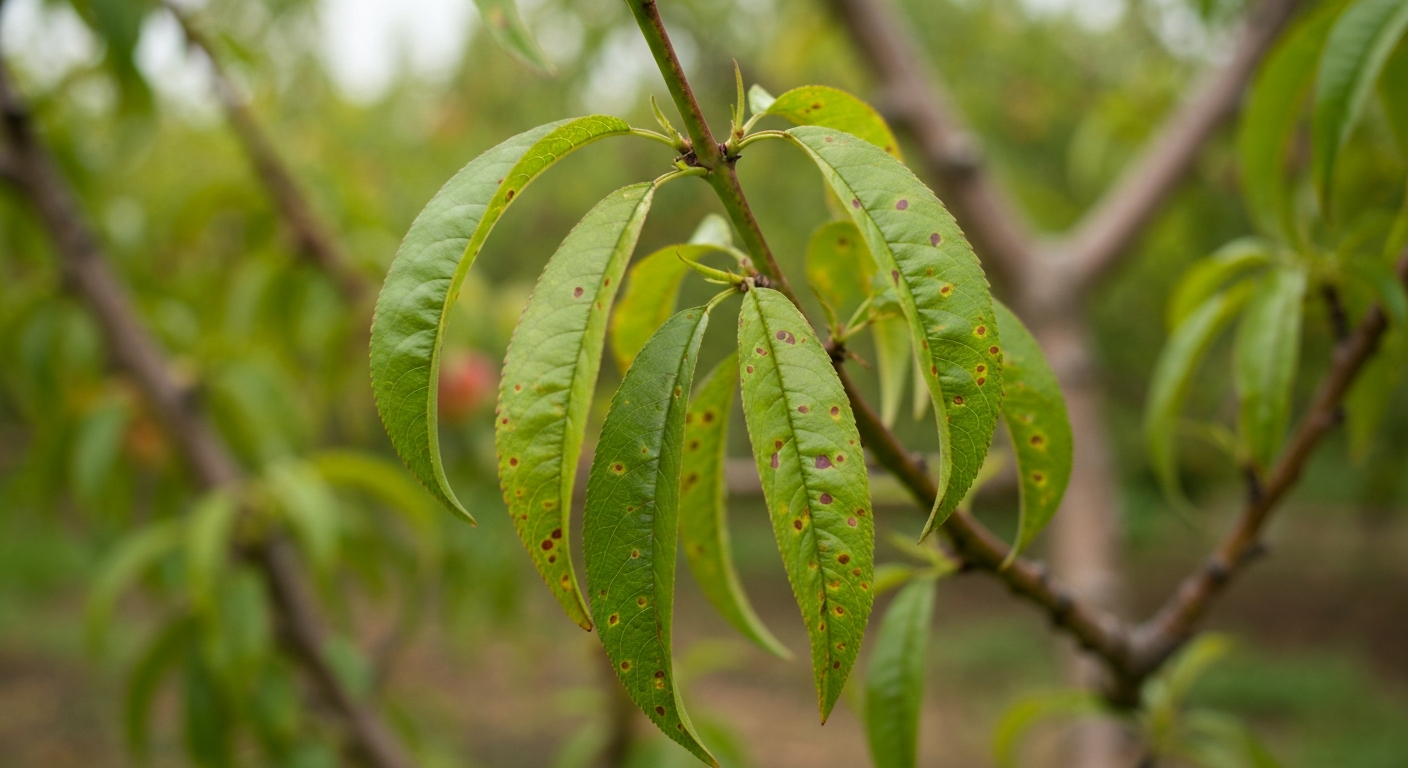
- Leaves: Small, angular, dark spots appear, often surrounded by a yellow halo. The spots may drop out, giving leaves a “shot-hole” appearance. Severely infected leaves turn yellow and drop prematurely. This is a classic leaf spot disease.
- Twigs: Dark, sunken lesions (cankers) form on young twigs, sometimes exuding gum.
- Fruit: Small, dark, sunken spots with cracked centers appear on the fruit surface, making it unmarketable.
- Causes: Caused by the bacterium Xanthomonas arboricola pv. pruni, which overwinters in twig cankers and infected buds. It spreads during warm, wet, and windy weather, entering through natural openings or wounds.
- Treatment: There’s no highly effective chemical treatment once the disease is established.
- Pruning: Remove and destroy infected twigs during dormancy.
- Copper Sprays: Dormant season copper sprays can help reduce overwintering bacteria, but must be applied carefully to avoid phytotoxicity.
- Prevention: Plant resistant varieties. Ensure proper nutrition and watering to maintain tree vigor. Avoid overhead irrigation. Prune for good air circulation.
4. Powdery Mildew (Podosphaera pannosa)
While often associated with other plants, powdery mildew can be a problem for peach trees, especially in warm, dry climates with high humidity at night.
- Symptoms:
- Leaves: White, powdery patches appear on the surface of young leaves, causing them to curl or distort.
- Twigs: New shoots may also be covered in white, powdery growth.
- Fruit: White, powdery spots on young fruit, which later turn brown or russeted, affecting fruit appearance and marketability.
- Causes: The fungus Podosphaera pannosa overwinters in dormant buds. Spores are spread by wind, germinating rapidly in humid conditions without needing free water.
- Treatment:
- Pruning: Remove infected shoots and leaves to reduce inoculum.
- Fungicides: Organic options include sulfur sprays (avoid applying in hot weather) or neem oil. Several conventional fungicides are also effective. For more general information on this common issue, check out our article on powdery mildew on plants.
- Prevention: Plant resistant varieties. Ensure good air circulation. Avoid excessive nitrogen fertilization, which can promote lush, susceptible growth.
5. Peach Scab (Cladosporium carpophilum)
Also known as “freckles,” Peach Scab is a fungal disease that primarily affects the fruit, but can also show up on leaves and twigs.
- Symptoms:
- Fruit: Small, circular, olive-green to black spots appear on the fruit skin, typically near the stem end. These spots may merge, causing large, scabby patches. Severely infected fruit can crack, making it susceptible to brown rot.
- Leaves: Small, velvety, dark spots on the undersides of leaves, often along the midrib.
- Twigs: Small, circular, olive-green lesions on young twigs.
- Causes: The fungus Cladosporium carpophilum overwinters in twig lesions. Spores are released in spring and spread by wind and rain, infecting fruit after petal fall, especially during prolonged periods of wetness.
- Treatment:
- Pruning: Remove infected twigs during dormancy.
- Fungicides: Apply fungicides starting at shuck split (when the fruit emerges from the dried flower parts) and continue at regular intervals, especially during wet periods. Organic options include sulfur or copper-based sprays.
- Prevention: Plant resistant varieties. Prune for good air circulation. Maintain good orchard sanitation.
6. Crown Gall (Agrobacterium tumefaciens)
Crown Gall is a bacterial disease that can affect a wide range of plants, including peach trees, causing tumor-like growths.
- Symptoms: Large, woody, irregularly shaped galls (tumors) appear on the roots or at the crown (the area where the trunk meets the soil line) of the tree. Galls can also form on lower branches. These galls disrupt the flow of water and nutrients, leading to stunted growth, yellowing leaves, and reduced fruit production.
- Causes: Caused by the bacterium Agrobacterium tumefaciens, which lives in the soil and enters the plant through wounds, often from planting, cultivation, or insect damage.
- Treatment: There is no effective chemical treatment for existing galls.
- Removal: For small galls, surgical removal may be attempted, but recurrence is common.
- Severely Infected Trees: Heavily galled trees should be removed and destroyed.
- Prevention:
- Inspect Nursery Stock: Purchase trees free of galls.
- Avoid Wounding: Be careful during planting and cultivation to avoid damaging the crown or roots.
- Crop Rotation: Avoid planting peaches in soil where crown gall has been a problem.
- Resistant Rootstock: Some rootstocks offer resistance.
- Soil Health: Healthy soil can help trees resist infection. For more on general root health, consider learning about root rot prevention too, as overall root health is critical.
Diagnosing Your Sick Peach Tree: A Step-by-Step Approach
When your peach tree shows signs of distress, accurate diagnosis is the first step toward effective treatment. It can be challenging, as different problems can have similar symptoms. Here’s how to approach it:
-
Observe Carefully:
- Location: Where on the tree are the symptoms? Leaves, fruit, twigs, trunk, roots?
- Timing: When did the symptoms first appear? Are they worse at certain times of the year?
- Pattern: Are symptoms widespread or localized? Are they on new growth or old?
- Progression: How quickly have the symptoms developed?
- Environmental Factors: Consider recent weather (wet, dry, cold snap), recent fertilization, or changes in care.
- For a deeper dive into general plant problem diagnosis, consult our guide on diagnose plant problems.
-
Use Diagnostic Tools: If you’re unsure what’s ailing your tree, take clear photos of the symptoms, including close-ups and wider shots of the whole tree. Then, use a tool like the Plant Disease Identifier app on your iPhone. Simply photographing symptoms with the Plant Disease Identifier app can provide immediate insights and potential diagnoses, helping you understand what might be going on. While AI tools are incredibly helpful for initial identification, they are informational and should not replace professional agricultural advice for definitive diagnosis or treatment plans, especially for large orchards or valuable trees.
-
Consult Local Experts: If symptoms persist or worsen, or if you have a significant investment in your trees, contact your local cooperative extension office. They have plant pathologists and horticulturalists who can provide expert advice, often including lab analysis of samples. This is crucial when dealing with a sick plant that isn’t responding to typical treatments.
General Treatment Strategies for Peach Tree Diseases
Beyond specific disease treatments, several general strategies are vital for managing peach tree diseases.
1. Sanitation
- Remove Debris: Rake up and destroy fallen leaves, fruit, and twigs regularly. This removes overwintering spores and bacteria.
- Prune Dead/Diseased Wood: Always prune out any dead, damaged, or visibly diseased branches.
- Sterilize Tools: Disinfect pruning shears and saws with a 10% bleach solution or rubbing alcohol between cuts and especially between trees to prevent spreading pathogens.
2. Pruning for Air Circulation
- Open Canopy: Peach trees should be pruned to an open vase shape to allow maximum air and sunlight penetration. This helps dry out foliage and fruit quickly, reducing the conditions favorable for fungal and bacterial growth.
- Remove Suckers/Water Sprouts: These vigorous, non-fruiting shoots compete for resources and can create dense areas.
3. Organic Treatment Options
Many organic fungicides and pesticides can be effective if applied correctly and preventatively:
- Copper-based Fungicides: Effective against many fungal and bacterial diseases (e.g., leaf curl, bacterial spot, brown rot). Apply during dormancy or as specified.
- Sulfur-based Fungicides: Good for powdery mildew, scab, and some other fungi. Be cautious about applying in hot weather, as it can burn foliage.
- Neem Oil: A broad-spectrum organic product that can act as a fungicide (e.g., powdery mildew) and an insecticide. It works best as a preventative or early treatment.
- Beneficial Microbes: Some products contain beneficial bacteria or fungi that can outcompete or inhibit plant pathogens.
4. When Fungicides Help (and How to Use Them Safely)
For severe or persistent disease problems, conventional fungicides may be necessary.
- Timing is Key: Fungicides are most effective when applied preventatively or at the very first sign of disease. They often work by creating a protective barrier on the plant surface, preventing spores from germinating.
- Rotate Products: To prevent pathogens from developing resistance, rotate between different types of fungicides (those with different active ingredients or modes of action).
- Read the Label: Always read and follow product labels precisely regarding mixing ratios, application timing, safety precautions, and pre-harvest intervals. Incorrect application can be ineffective, harm your tree, or be unsafe for consumption.
- Professional Advice: If you’re unsure which product to use or how to apply it, consult your local extension office.
Prevention: The Best Defense Against Peach Tree Diseases
The most successful strategy for managing peach tree diseases is prevention. A healthy tree is a resilient tree.
- Choose Resistant Varieties: When purchasing new trees, select varieties known to be resistant or tolerant to common local diseases. This is your first and best line of defense.
- Proper Site Selection and Soil Preparation:
- Sunlight: Plant in a location that receives at least 6-8 hours of direct sunlight daily.
- Drainage: Peaches require well-drained soil. Avoid heavy clay soils or areas where water collects, as this can lead to root rot and other issues.
- Soil pH: Aim for a soil pH between 6.0 and 6.5.
- Air Circulation: Ensure adequate spacing between trees and other structures to promote good airflow.
- Optimal Watering and Fertilization:
- Water Deeply: Provide consistent, deep watering, especially during dry periods and fruit development. Avoid frequent, shallow watering.
- Avoid Overhead Irrigation: Drip irrigation or soaker hoses are preferred to keep foliage dry, reducing fungal disease spread.
- Balanced Nutrition: Conduct a soil test to determine nutrient needs. Fertilize based on recommendations, avoiding excessive nitrogen, which can promote lush, susceptible growth.
- Dormant Season Care:
- Dormant Oil Sprays: Apply horticultural oil during dormancy to smother overwintering insect eggs and some fungal spores.
- Dormant Copper Sprays: As mentioned, copper sprays during dormancy are crucial for diseases like Peach Leaf Curl and can help with bacterial spot.
- Winter Protection: Protect young trees from winter injury, as wounds can provide entry points for pathogens.
Common Mistakes Home Gardeners Make
Even experienced gardeners can make errors that inadvertently invite disease.
- Ignoring Early Symptoms: Small spots or slight leaf discoloration can quickly escalate. Early detection is key. Don’t wait until half your leaves are curled or your fruit is rotting.
- Improper Watering: Both overwatering (leading to root issues) and underwatering (stressing the tree) weaken the tree’s defenses. Stick to consistent, deep watering.
- Over-fertilization (Especially Nitrogen): Too much nitrogen promotes soft, succulent new growth that is highly attractive to pests and more susceptible to diseases like powdery mildew.
- Poor Sanitation: Leaving mummified fruit, fallen leaves, or diseased branches on the ground provides a breeding ground for pathogens to overwinter and reinfect the tree next season.
- Incorrect Pruning: Dense canopies restrict airflow, creating a humid environment perfect for fungal growth. Pruning at the wrong time (e.g., during wet weather) can also spread disease.
- Using the Wrong Treatment: Applying an insecticide for a fungal problem, or vice-versa, is ineffective and can be harmful. Always identify the problem accurately before treating.
- Not Reading Product Labels: Misunderstanding application rates, timing, or safety precautions for sprays can lead to poor results or unintended damage.
Conclusion
Protecting your peach tree from disease is an ongoing commitment, but a truly rewarding one. By understanding the common peach tree diseases, recognizing their symptoms, and implementing proactive prevention and timely treatment strategies, you can significantly increase your chances of a bountiful, healthy harvest. Remember, vigilance, good sanitation, proper cultural practices, and knowing when to seek expert advice are your best tools in the battle against tree ailments. Happy gardening!